Objective & Overview
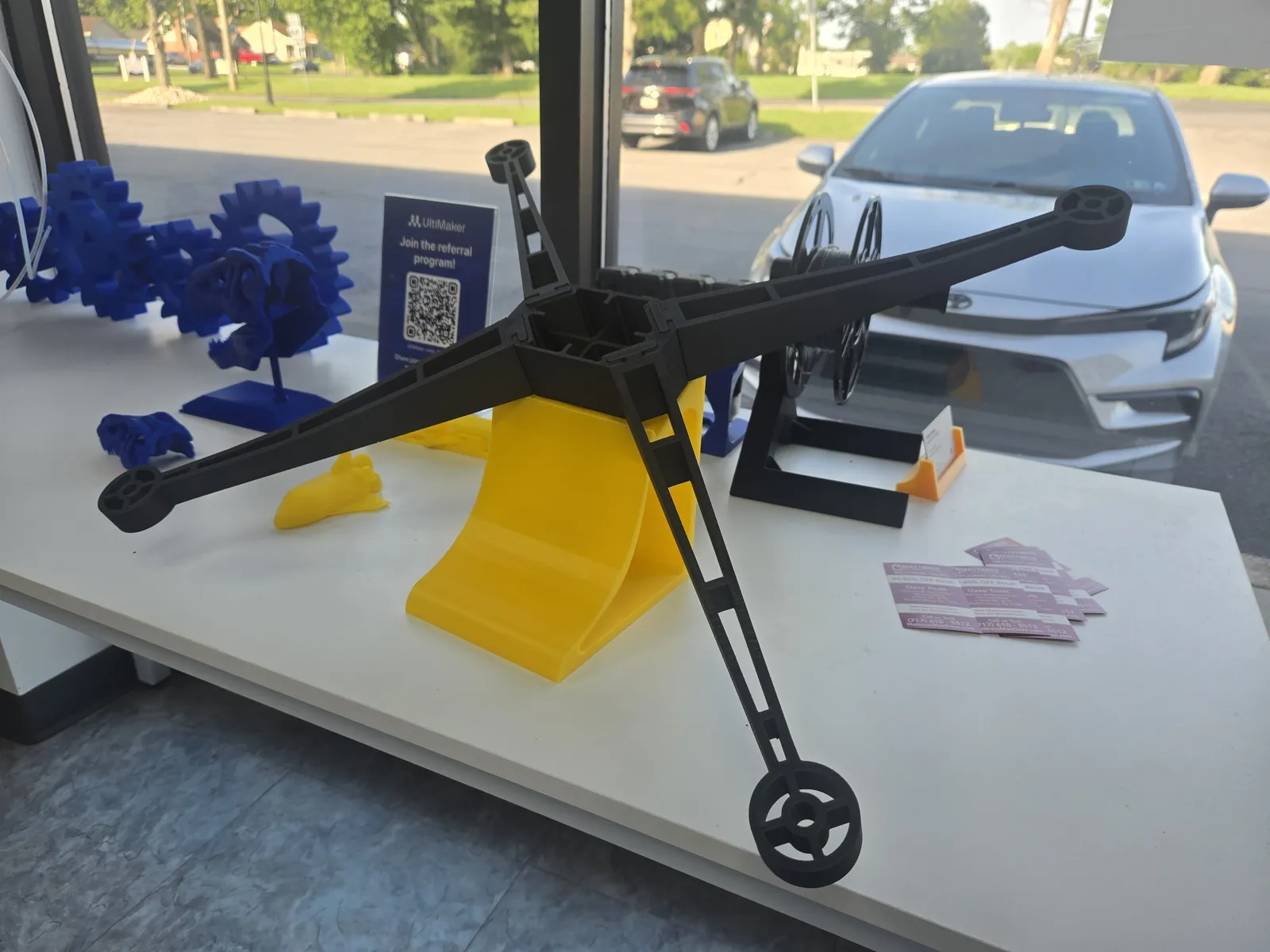
This project evaluates the structural fabrication of high-load unibody mounting frames using third-party Tectonic KRATIR PA6/66 CF Black (2.85 mm) filament across industrial UltiMaker platforms. The primary goal is replacing CNC-milled aluminum brackets with carbon-fiber-reinforced polyamide to achieve substantial weight savings without compromising torsional rigidity.
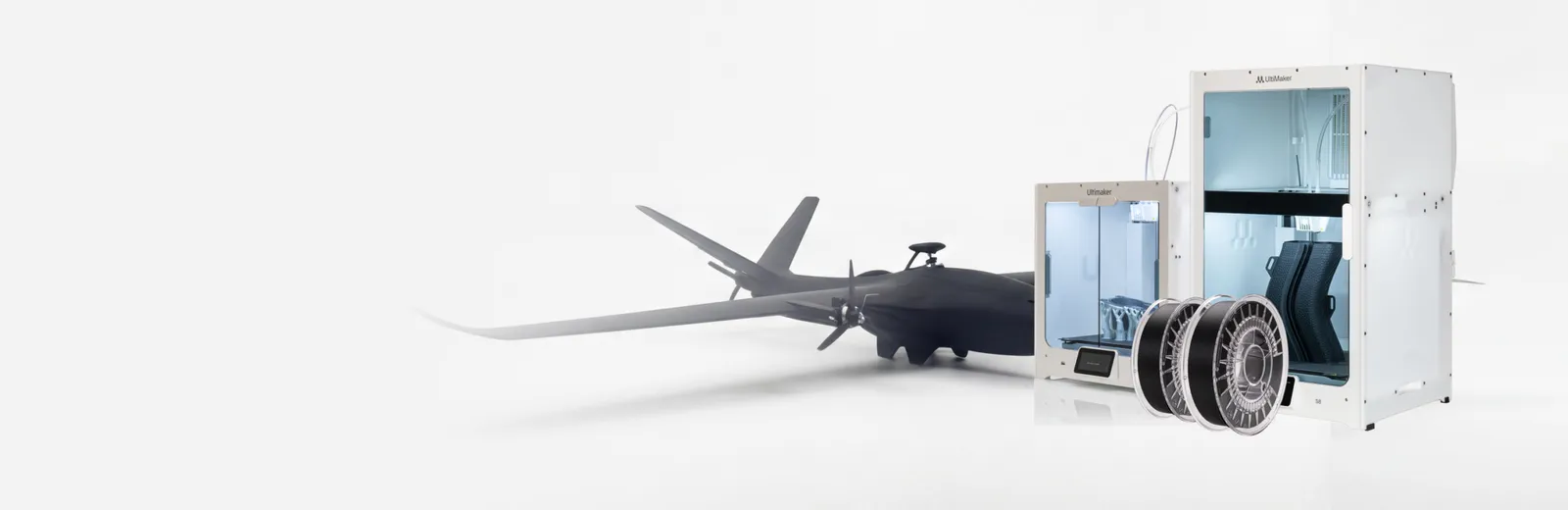
Printing third-party carbon-filled nylon demands precise thermal control and abrasion-resistant hardware. While the UltiMaker S8 Pro handles the material cleanly using its dual-drive feeder and Print Core CC 0.6 mm, the UltiMaker Factor 4 delivers superior interlayer bonding and dimensional repeatability due to its closed-loop direct-drive extruder, 70°C actively heated build chamber, and native relative humidity (<15% RH) material storage bays.
Items & Technical Specifications
| Item / Component | Model & Specs | Role / Configuration |
|---|---|---|
| Composite Filament | Tectonic KRATIR PA6/66 CF Black (2.85mm) | Tensile Modulus: 7.5 GPa, Tensile Strength: 113 MPa, HDT: Up to 180°C |
| Primary Production Platform | UltiMaker Factor 4 / Factor 4+ | Direct-drive dual extrusion, 70°C active chamber, Print Core CC+ 0.6mm |
| Secondary Platform | UltiMaker S8 Pro Bundle | Dual extrusion with Material Station, Print Core CC 0.6mm |
| Hotend & Tooling | UltiMaker Print Core CC / CC+ (0.6mm) | Abrasion-resistant wear coating for continuous carbon-fiber flow |
| Bed & Adhesion Interface | PEI Flexible Sheet + Magigoo PA | Bed Temp: 100°C–110°C, zero-lift warped brim mitigation |
Visuals
Build Log & Engineering Notes
Tectonic 3D Marketplace Profile Import
Imported official Tectonic KRATIR profiles from the UltiMaker Cura Marketplace. Filament was pre-dried at 80°C for 8 hours prior to loading into the Factor 4 Material Station bay (<15% target RH). Test cubes showed excellent matte surface finish and zero fiber clumping through the 0.6 mm CC+ core with nozzle temperatures set to 260°C–280°C.
Hygroscopic Swell & Corner Lifting on S8 vs. Factor 4
Because PA6/66 base polymer is highly hygroscopic, leaving spools exposed beyond 45 minutes caused micro-voiding and stringing. Additionally, large 280 mm structural frame footprints experienced minor corner peeling on the S8 when chamber drafts occurred. Shifting the part to the Factor 4's actively heated 70°C chamber completely eliminated differential cooling and internal shear stress.
Mechanical Validation & Post-Annealing
- Conduct post-print annealing at 130°C for 4 hours to maximize crystalline matrix alignment and thermal stability up to 180°C.
- Run three-point bend tests to verify whether printed frame sections match target 7.5 GPa flexural modulus baseline.